
Meant to Fade (the book)
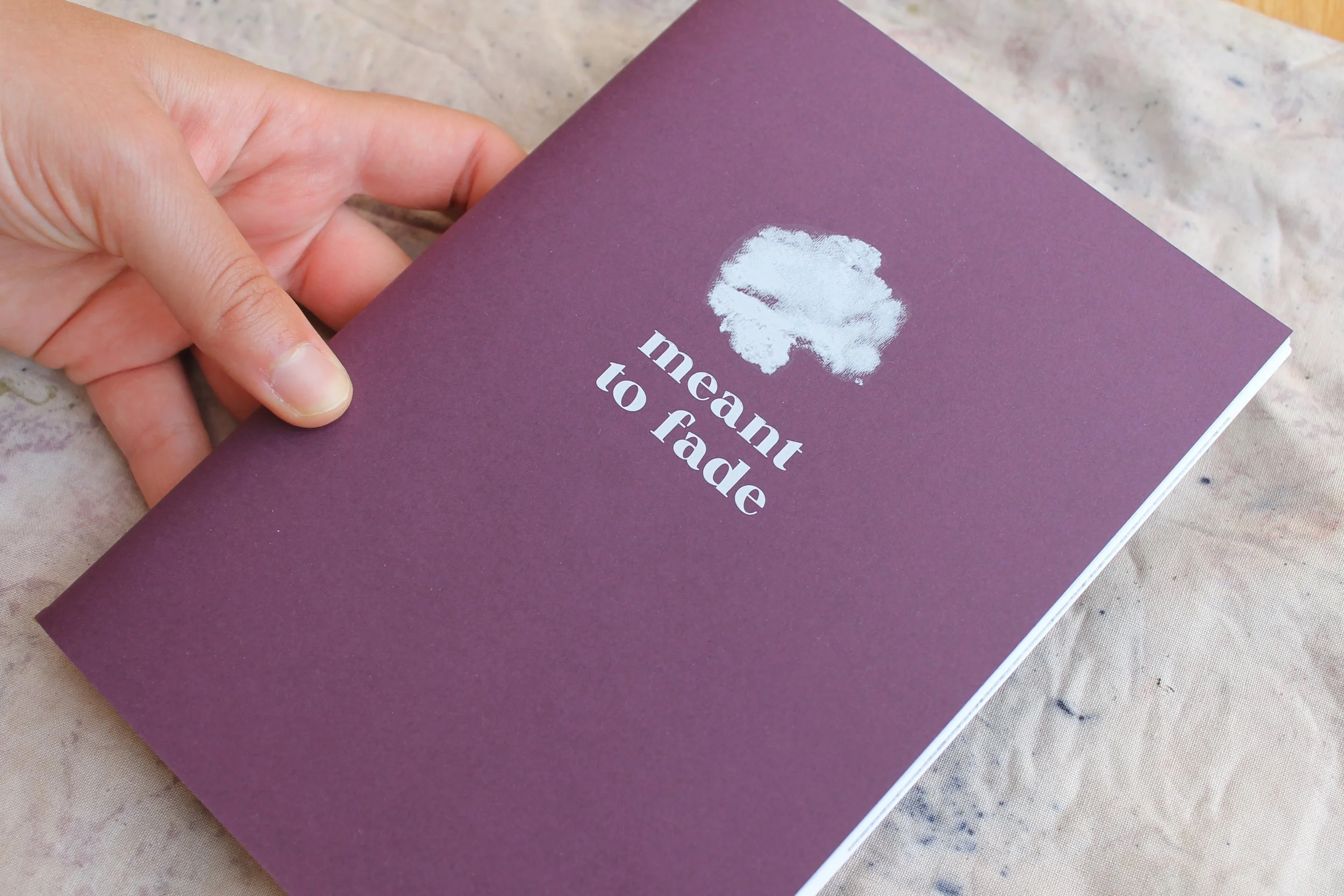
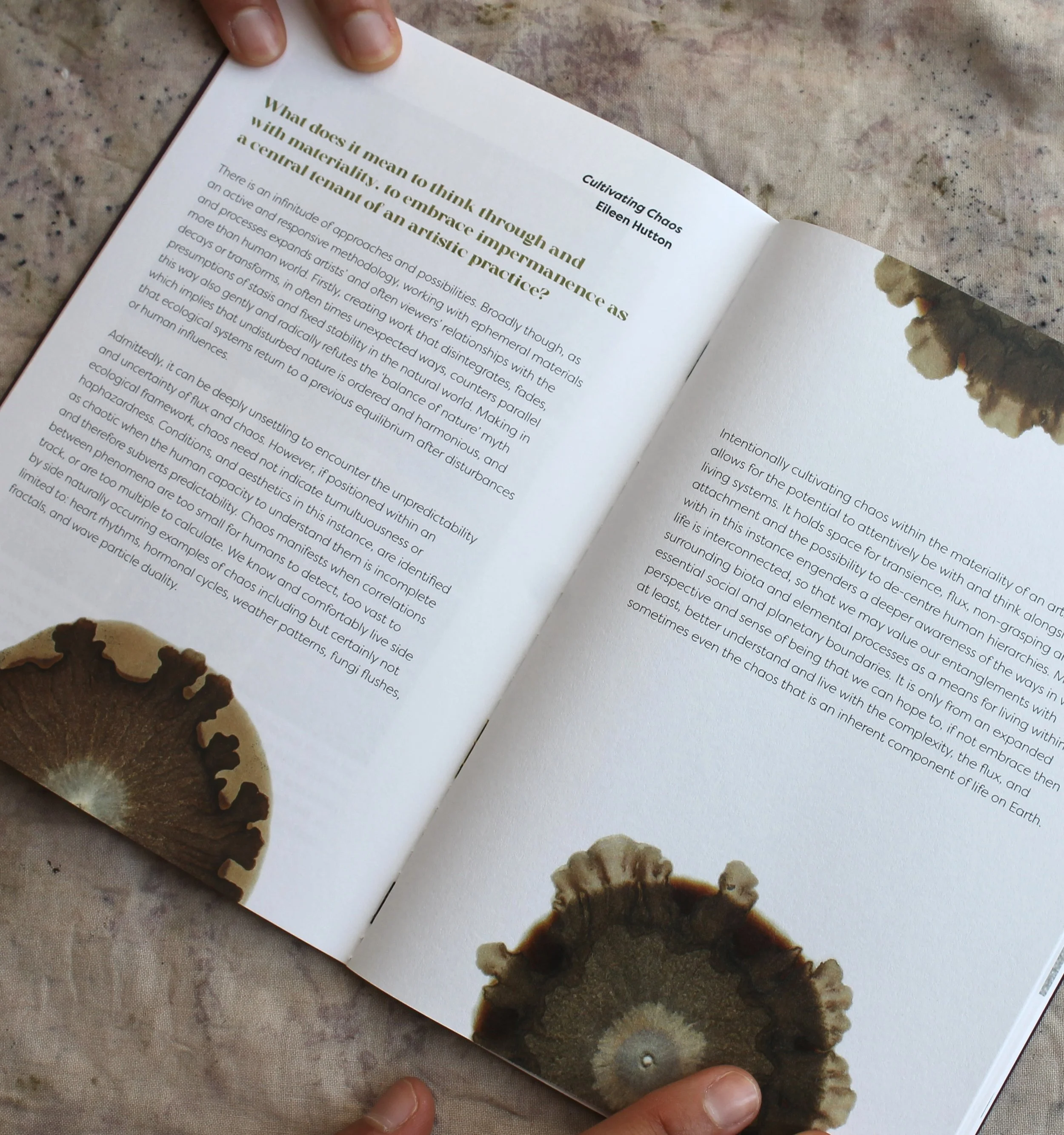
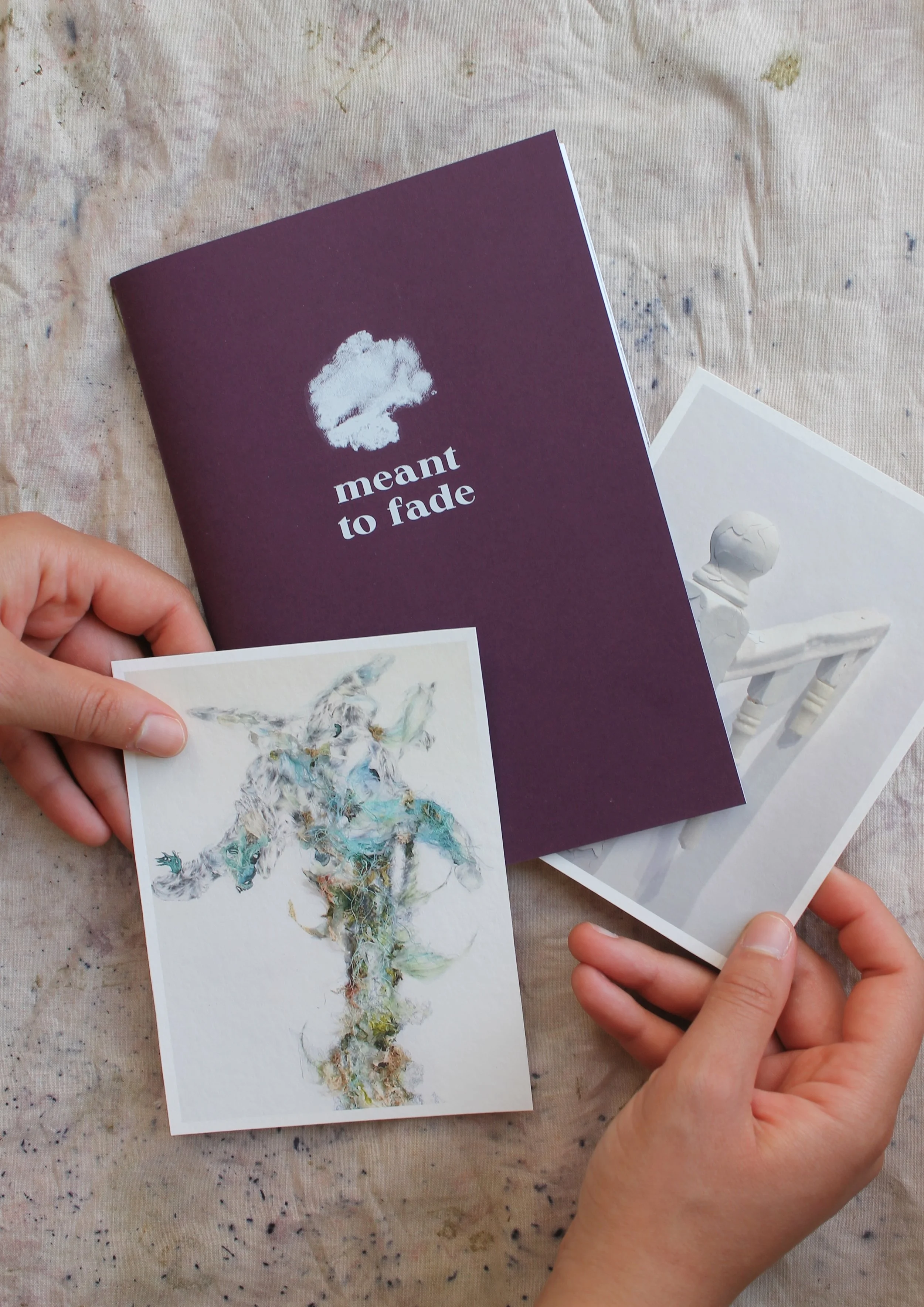
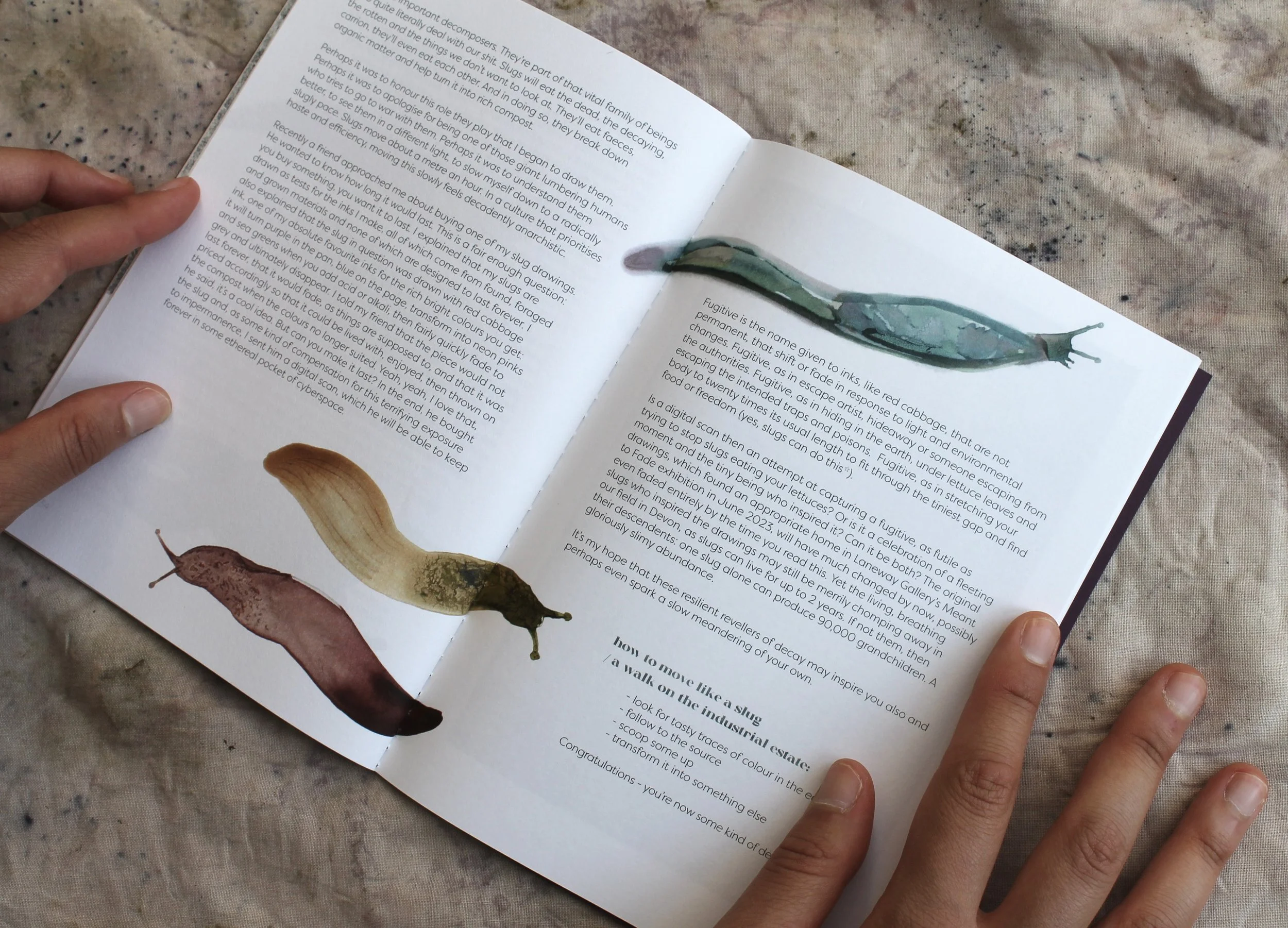
During the original Meant to Fade exhibition in Cork, I curated a collection of images and writing that related to the themes of the show. Each copy sold included a 'material pouch' with samples of organic materials to touch and explore–dyed wool, bio-plastic, birch bark, and more. The publication is meant to provoke new imaginings of what art & making can and should be in the face of rapid ecological change. It leads the ideas, themes, and materials of the Meant to Fade exhibition out of the gallery and into the hands & homes of others interested in ecological art & care-full making. There are still a few copies available. Contact to purchase. This publication was designed by Malú Colorín.
Featured artists: Marielle MacLeman, Annie Hogg, John Steck Jr., Molly Sawyer, Aster Reem David, Ida Mitrani, Joanna Hopkins, Christine Prescott, and Christine Mackey. Writing by: Ione Maria Rojas, Eileen Hutton, Sophie Anna Gibbings, Áine Rose Connell, Francine Marquis, and myself.
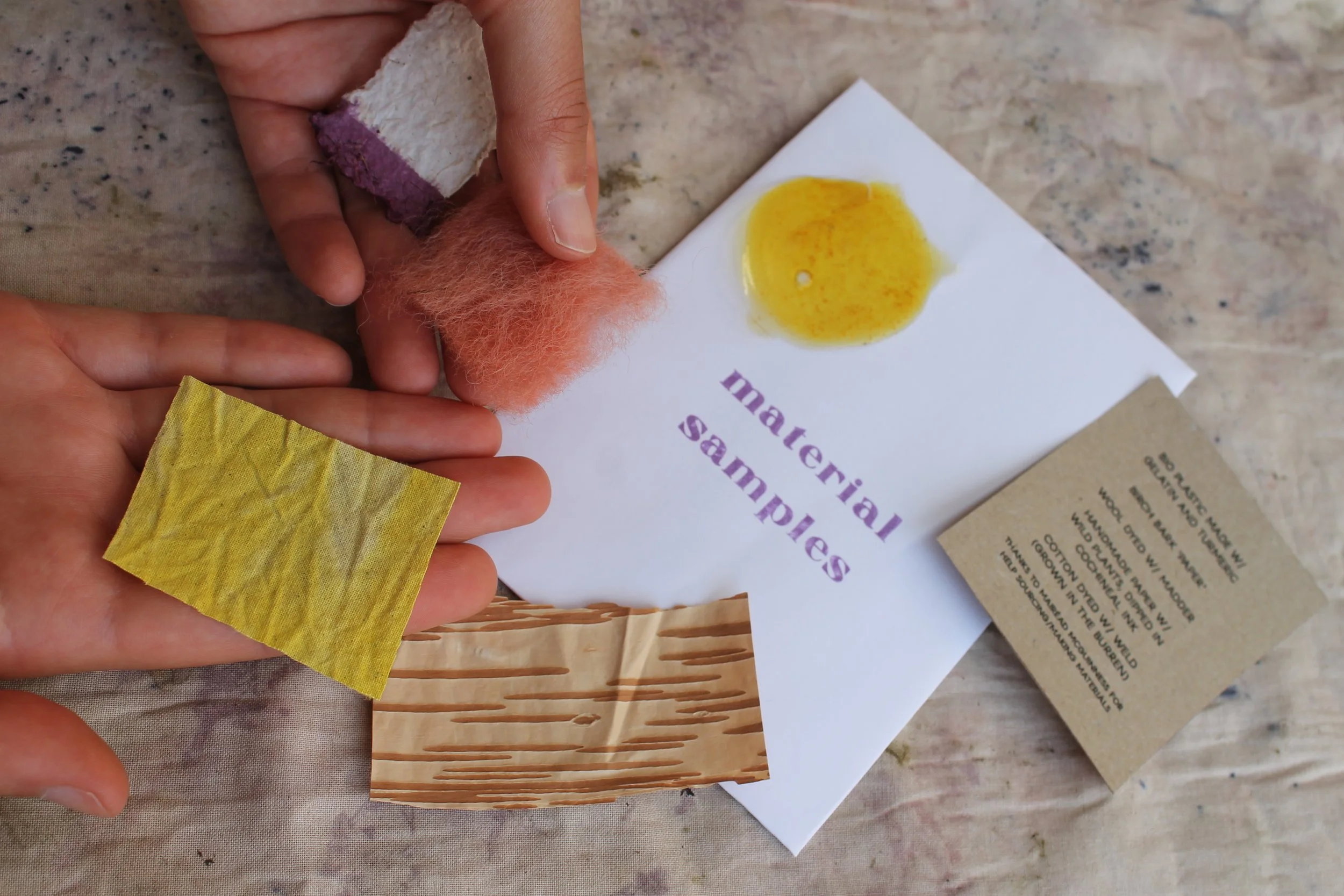
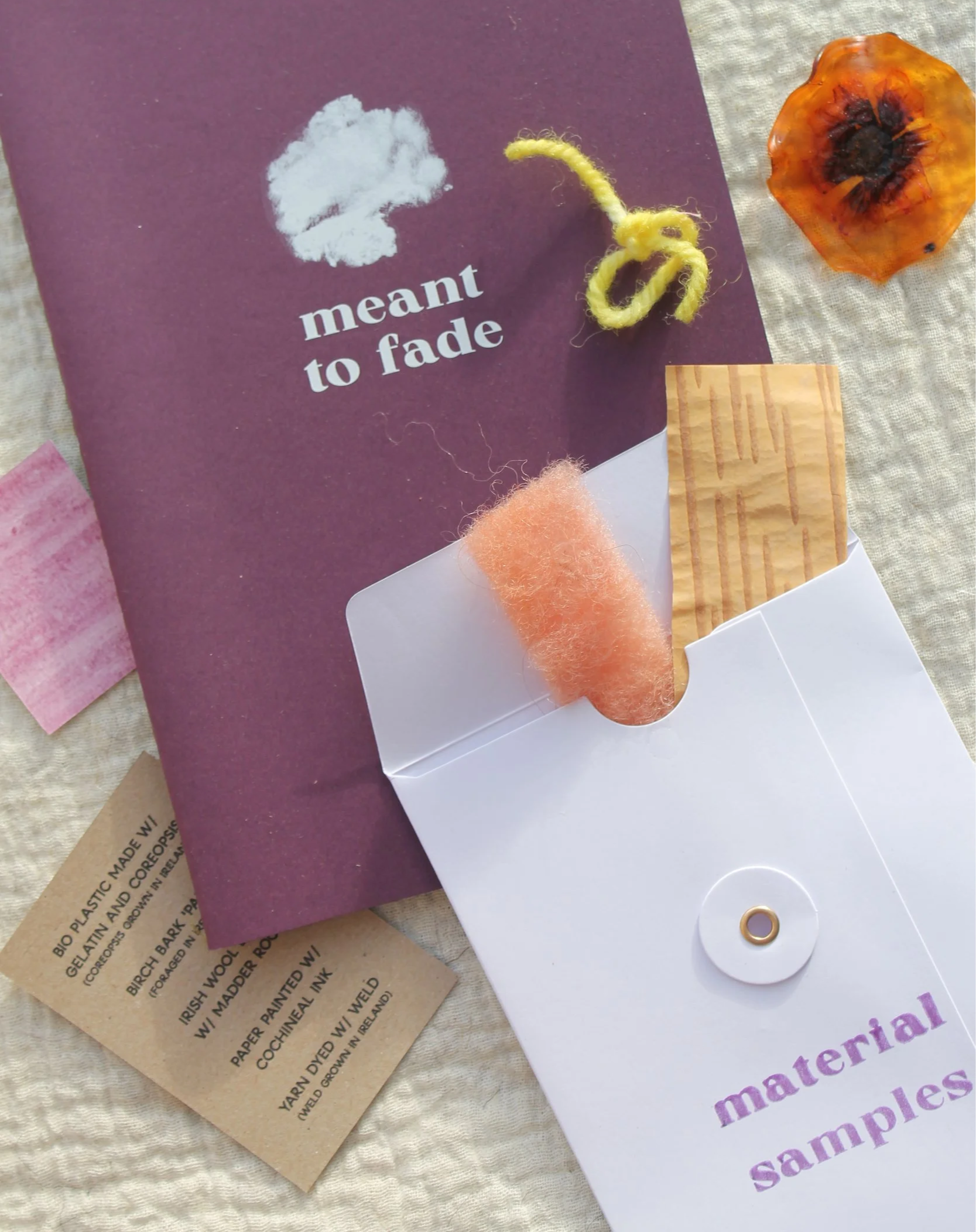
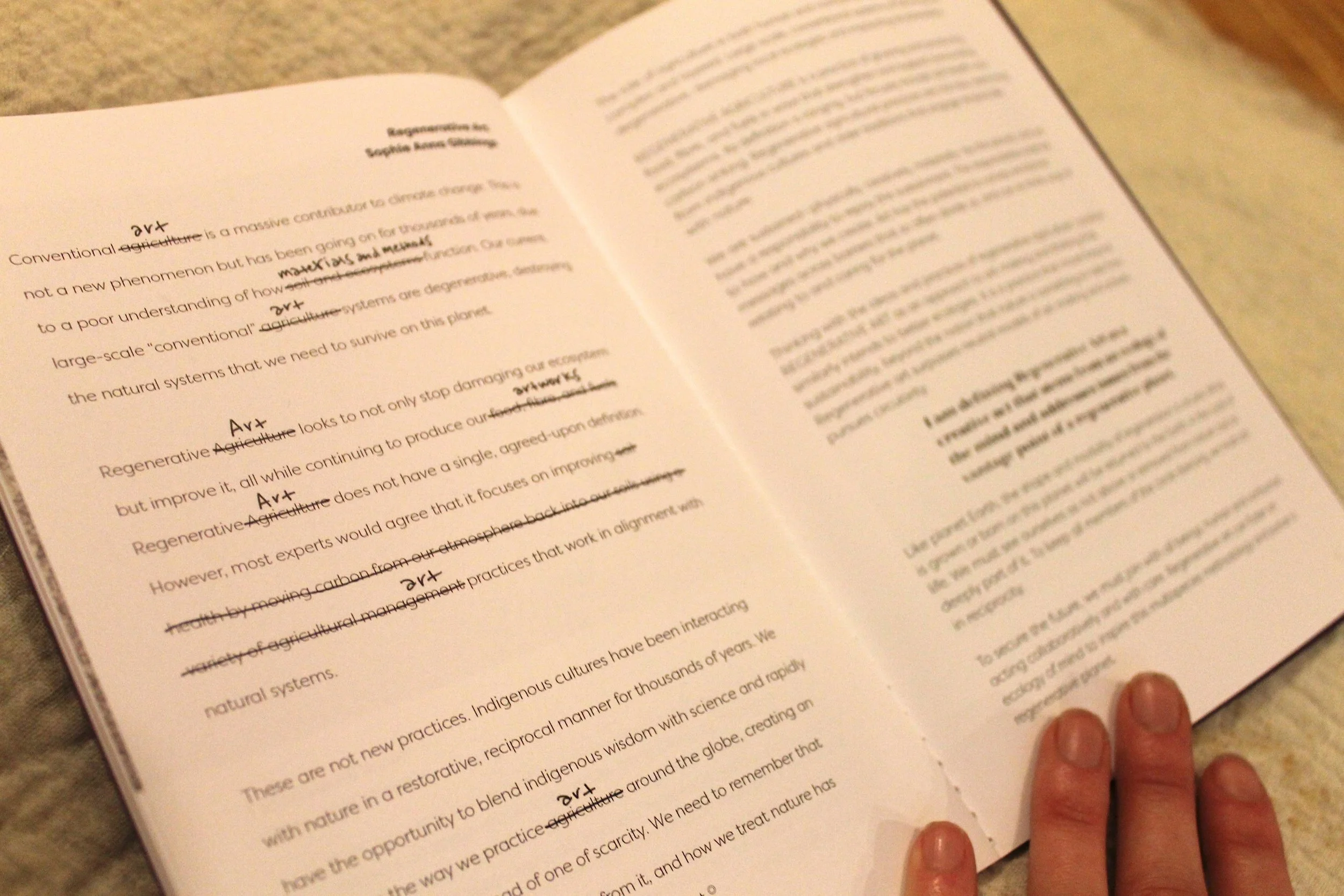
Meaning to Fade by Katerina Gribkoff
It is the assumption that natural colours fade. But what is natural? Unnatural? From another planet? Not made from stuff-of-the-earth like all the rest—all the rest of the swirling marmalade of things, that breathe and don’t, that grow and shrink back, that build up and break apart?
Our relationship to time is skewed: subjective and shallow. We live shortly, quickly—fade faster than a mountain, a field, a tree. But our impacts and imprints can outrun a forest or a glacier and definitely our bodies. We want what we make, like art, to last, even outlast, outlive our earthly selves.
But not our products, our quotidian commodities easily found but not easily understood in terms of make-up, lasting the car-ride home and not much longer, victim to planned obsolescence. Victimising us, too, in a smaller but building way. Victimising us and more so the larger us: the plant and animal us, the people us, the adult and baby/young and old us, the fungal us, the flying or swimming us, the decomposing, evolving, crafting us. Everything fades—either now or ‘never’, maybe in a thousand tomorrows, a hundred springs, a million mating seasons.
Meaning to fade is caring, sharing, wanting to be permeable to others, wanting to be momentary, a pause in a process of coming together and drifting apart.
Intentional fading is an acknowledgement of a precarious reality. It is nice and soothing, subtle and smooth, happening when heads are turned and eyes are blinking. Colours change, contours erase, symbols and gestures disappear. Pieces can splinter off, to be eaten by a worm or ground under a shoe, to become food or fodder or flotsam.
Any solid thing, exhibiting sturdiness and singularity, might seem and even be for a while an obstacle to decay and regeneration, to reincarnation—the shifting of beings and things between forms. But obstructions fade, too. They cannot hold their positions indefinitely, maintaining a fixed facade. Sharp mountains dull, pavement cracks, a bag of soil bleaches in the sun.
Limestone hills dissolve and wash out to sea, spurred on by acid rain, transforming into oyster shells. Metals rust and fabrics fray. Plastics are spun and split into fragments by currents and waves, swirling into piece-y soups that become home to tiny aquatic lives.
Everything is shifting, leaking, moving through forms. Every thing, hard and soft, mineral or metal or plastic. Some movements are quick, others are imperceptible. To resist this change or this breaking down of things is futile. Energy will be wasted fighting against these inevitabilities.
Must artwork follow this criteria drummed up by modern western society to be a lasting mark, to maintain the pretence of an archival, eternal nature? So that it may be collected or hidden away in a private place, removed from spaces of experiment and inquiry?
Art that lasts forever isn’t really lasting, not as a whole and definitely not forever. It is shedding particles, affecting local ecologies in its formation and decline, and will eventually become a pollutant unless preserved for centuries by a museum.
Things can be different. Art making, displaying, and selling can be different. Precarity can be good. Decay can be encouraged. A work of art might last for two months or one splendid evening. It might last for a conversation, a long walk, or a few hot days. But it can live on as a memory, maybe a photograph or online post. A work on paper or cotton might be reborn as a plant once fed into the soil.
A drawing made from blackberry ink can fade to grey in one week and it might just be beautiful.